
04, Apr, 2025
Why Are Teens Getting Emotionally Attached to AI Bots?
5 Psychological Reasons from a Cyber Psychologist’s Lens
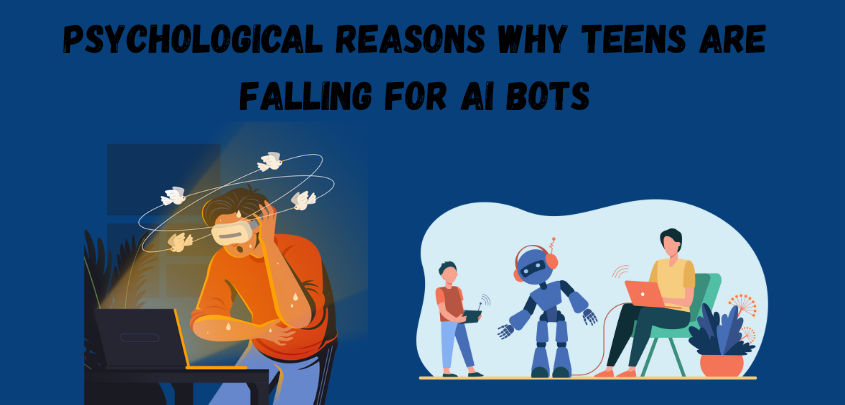
In today’s hyper-digital world, teens aren’t just texting friends or scrolling through memes—they’re forming emotional bonds with AI bots.
From Replika to Snapchat’s My AI, emotionally intelligent chatbots are slowly becoming digital companions for many adolescents. But what’s truly driving this trend?
As a cyber psychologist, I believe this isn’t just about technology. It’s about emotional vulnerability, psychological safety, and unmet relational needs.
Let’s explore the 5 core psychological reasons why teens are falling for AI bots—and what this reveals about their inner world.
1. AI Feels Emotionally Safe
For many teens, human interaction—especially offline—can feel risky. There’s fear of judgment, awkward silences, or not being “enough.”
AI bots, on the other hand, offer a non-judgmental space where they can be fully themselves. This triggers what psychologists call the “online disinhibition effect”—teens are more willing to share personal thoughts when they feel safe, anonymous, or in control.
2. Instant Validation is Emotionally Rewarding
AI bots are programmed to be affirming, responsive, and agreeable. They mirror emotions and deliver consistent emotional feedback—which can be incredibly rewarding for teens seeking approval or affection.
But there’s a catch: this loop creates a dopamine feedback cycle, where validation is expected instantly and constantly. Real relationships can’t compete with that.
3. Real Intimacy is Being Replaced by Simulated Connection
Teens may believe the AI “understands” them. The result? Parasocial relationships—emotional bonds formed with an entity that can’t actually reciprocate.
These one-way connections feel real but lack depth, accountability, and empathy. Over time, they may erode the desire to invest in human connections that require effort.
4. AI Offers an Escape from Emotional Complexity
Human relationships come with boundaries, arguments, and unpredictability. AI bots are designed to be compliant, consistent, and easy to engage.
This simplicity may be appealing—but it also reduces emotional resilience. Teens begin to seek emotional comfort in tech, rather than learning how to navigate the ups and downs of real-life relationships.
5. AI Fills the Loneliness Gap
We often assume today’s teens are hyperconnected. Yet studies consistently show that Gen Z is the loneliest generation.
In a world where even friendships are filtered, teens are turning to AI bots for companionship, comfort, and “someone” to talk to at 3 a.m. It’s soothing—but false intimacy can deepen emotional isolation in the long run.
So, What Can We Do?
Instead of reacting with fear or blame, let’s respond with empathy and curiosity.
Ask:
🧠 What emotional need is this bot fulfilling?
🧠 Where is the gap in their real-world relationships?
As adults, educators, and mental health professionals, our role isn’t to shame their choices—it’s to guide them toward digital emotional literacy.